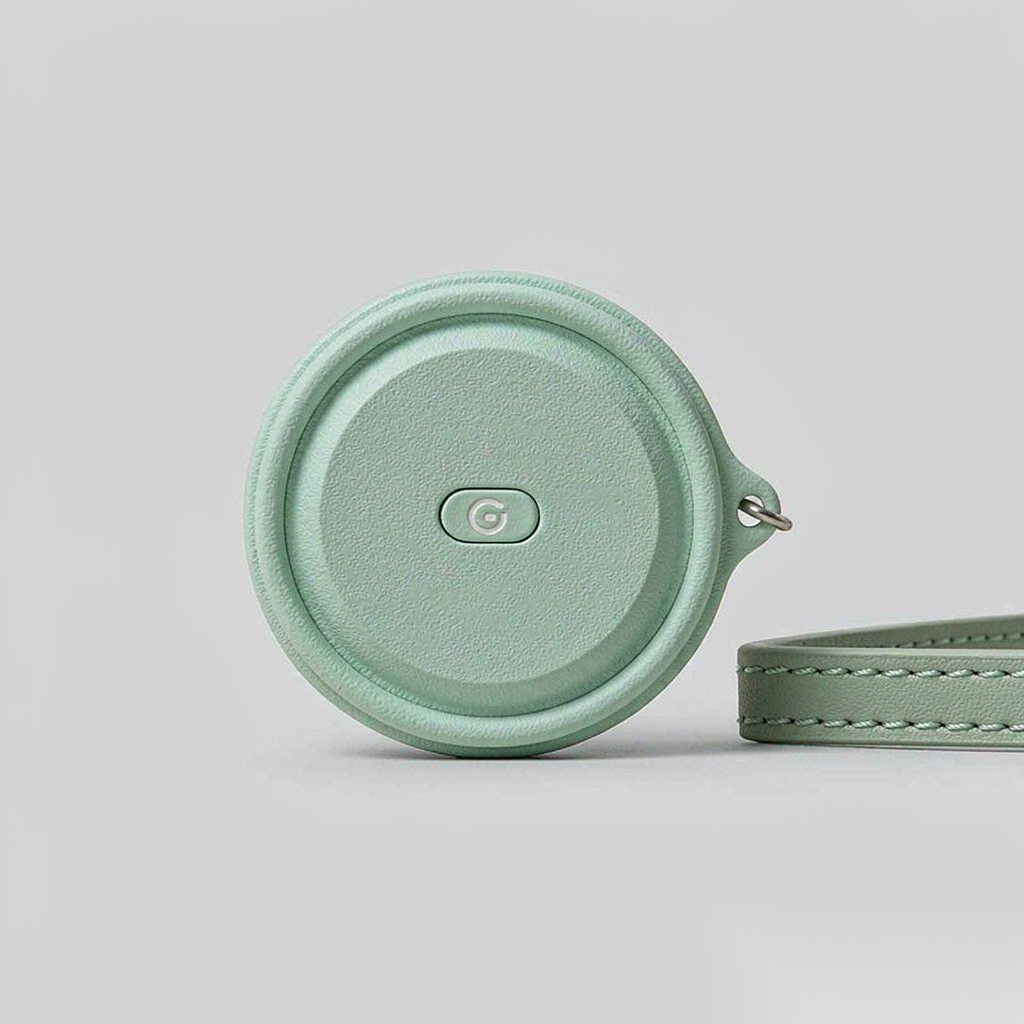
Most cat trackers cost $40 to buy and then $6 to $8 a month, forever. Over four years that is roughly $330 — eight times the hardware. And in our own informal survey of 240 cat owners, 41% had cancelled their subscription within 18 months, usually after a quiet month, without realising the tracker had stopped reporting.
This guide is about the alternative: tags that work on free location networks and never ask you for a card number. We make one of them. We will also tell you when it is the wrong choice.
1. How free tracking actually works
Apple's Find My and Google's Find My Device networks are crowdsourced: any nearby iPhone or Android phone quietly relays the Bluetooth signature of your tag to the owner. No cellular plan is involved, and no monthly fee is possible, because there is no carrier.
That is the whole trick. In a dense suburban area there is almost always a phone within 50 metres within a minute. In a national park there may not be a phone within five kilometres for hours.
The honest one-line summary: free networks are excellent where people are, and useless where they are not.
2. Four-year cost comparison
| Type | Hardware | Monthly | 4 years total | Best for |
|---|---|---|---|---|
| Find My / Find My Device tag | $40 | $0 | $40 | Suburban and urban cats |
| GPS + LTE tracker (entry) | $50 | $6 | $338 | Dogs with real escape risk |
| GPS + LTE tracker (premium, live) | $90 | $9 | $522 | Rural, working animals |
| AirTag-style (not cat-rated) | $29 | $0 | $29 | Not recommended — no ring, no waterproofing |
The gap is not marginal. It is the difference between a $40 one-off and a $500 commitment, for a cat that mostly stays within 100 metres of home.
3. Where free networks fail
Be clear-eyed about three scenarios:
- Deep wilderness. No phones, no signal. A subscription tracker with GPS is genuinely better here.
- Fast-moving escape. A panicked cat can cover 500 metres in minutes. Free-network updates are opportunistic, not continuous — you may get a fix every few minutes rather than every 10 seconds.
- Indoors, far from a road. Precision drops to tens of metres, which is enough to know which house, not which room.
If your cat is an indoor-only animal with occasional door-dashes, none of this matters. If your cat free-roams in farmland, buy the subscription tracker and stop reading.
4. How to choose in five minutes
Ask three questions in this order:
- Where does the cat actually go? Garden and neighbouring gardens → free network. Farmland or woods → paid GPS.
- Will you keep paying? Be honest. If a monthly fee is likely to be cancelled, a free tag that still works beats a paid one that does not.
- What does your cat tolerate? Anything over 30 g gets noticed and scratched at. Under 22 g is usually ignored within a day.
That is it. Weight, network type and honest self-assessment. Everything else is marketing.
Disclosure: we sell the NovTag, a free-network tag. We have tried to describe the limits of that category plainly, including the cases where you should buy something else.